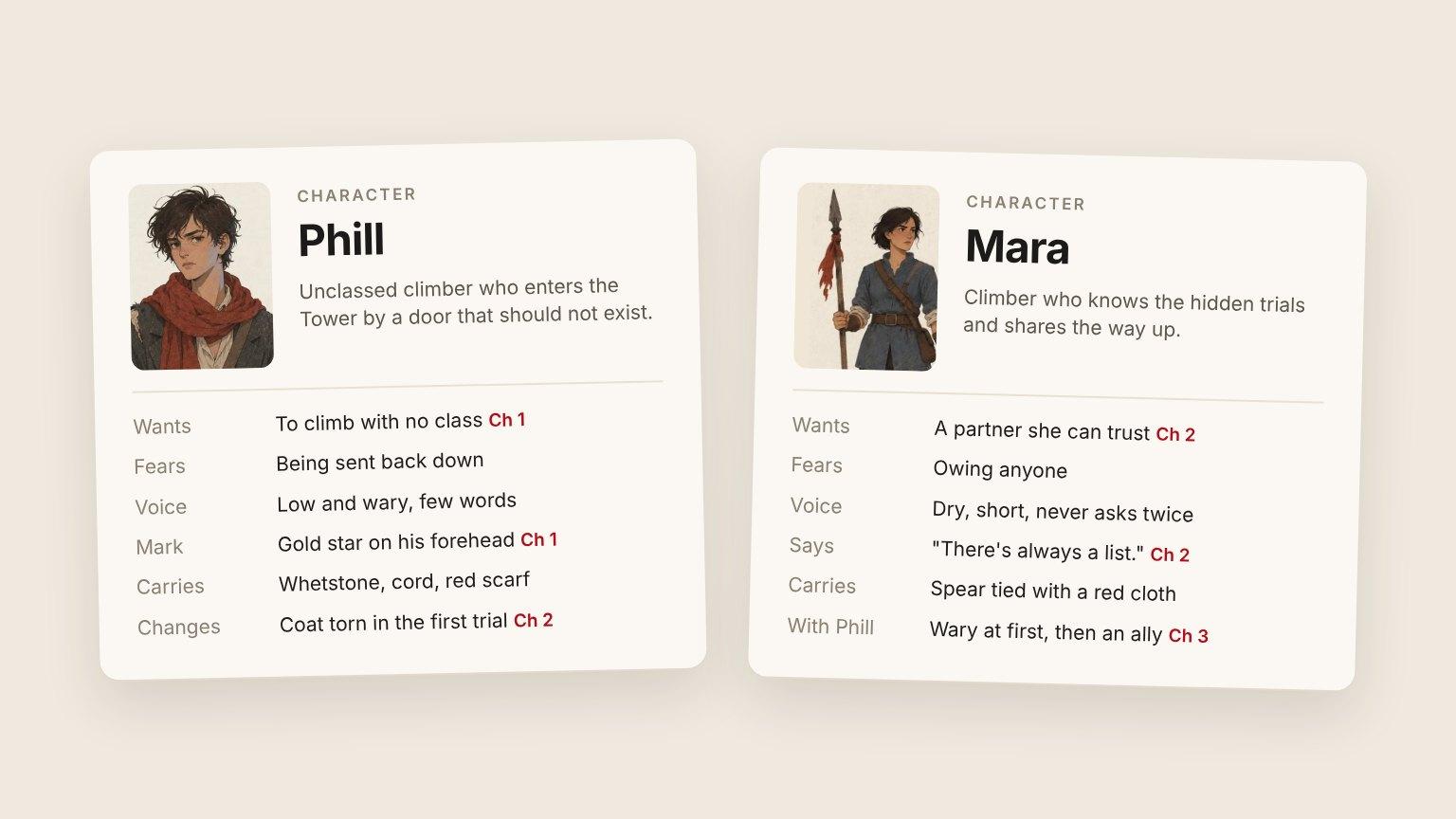
A character bible is where you keep everything true about the people in your story: how they look, how they talk, what they want, who they know, and how they change. Each person gets a profile, and the profiles together make the bible.
This guide covers what a character bible is, what to put in a character profile, the few questions that actually help, how it fits next to a story bible and a reference sheet, a free template, and how to keep it true while the draft moves.
What is a character bible?
A character bible is a set of character profiles for one book or a whole series. A profile covers one person. The bible holds all of them, plus a cast list so you can see who is in the story at a glance.
Its job is simple. When you write chapter 20, you should be able to check a character's eye color, their way of speaking, and what they already know, without rereading chapters 1 to 19.
A short profile you keep current is worth more than a long one you never open. Write down the facts that change what a scene can say, and skip the rest.
What to put in a character profile
Every profile can follow the same order. Fill the top half for every named character, and the bottom half only for the main cast.
- Who they are: name, other names, role, age, where they come from, first chapter
- Look: build, face, hair, marks, usual clothes, and things they always carry
- Voice: how they talk, words only they use, words they would never say
- Inside: what they want, what they need, what they fear, and one secret
- People: how they feel about each other character, and what each one knows
- Arc: where they start, what changes them, and where they end
- Changes: each chapter where something about them changed, and why
A manuscript studio with source-linked Wiki review.
Character questions that actually help
Long character questionnaires ask for a favorite color and a star sign. Those answers rarely reach the page. A better test for any question: would the answer change what this person does in a scene?
- What do they want, and what will they give up to get it?
- What are they afraid other people will find out?
- What would they never do, and what would make them do it anyway?
- Who do they trust, and who do they only pretend to trust?
- What do they say when they are angry, and what do they say when they are lying?
- What do they believe that is not true?
Character bible vs story bible vs reference sheet
A story bible covers the whole story: characters, places, world rules and the timeline. The character bible is the character part of it, pulled out so it can go deeper. Many writers start with one document and split the characters out once the cast grows past a handful.
A character reference sheet is a picture: one character from the front, side and back in the same outfit. The profile says what is true about a person. The sheet shows what they look like. Link the sheet from the profile so the two never disagree.
A free character profile template
Copy this structure once per character. Or download the template as a plain text file that opens anywhere, with a cast list at the top and one blank profile to copy.
Fill in the main cast first. Leave a line blank until the draft needs it; an empty line is better than a guess you forget to fix.
- Cast list: name, role, first chapter, last chapter
- Who they are: name, titles, role, age, home, job, first chapter
- Look: build, face, marks, clothes, what they carry, link to the reference sheet
- Voice: how they talk, their words, words they avoid, one line that sounds like them
- Inside: want, need, fear, old hurt, secret, line they will not cross
- People, arc and changes: one row per person and per chapter
- Facts to check: the details that are easy to get wrong, with their chapter
How to keep a character bible true
Character bibles go stale in the middle of the draft. A scar appears in chapter 12, a friendship breaks in chapter 15, and the profile still says the old thing. Three habits stop that.
- Write the chapter next to each fact, so you can check the page instead of trusting the note
- Keep fixed facts (birthplace, eye color) apart from changing ones (wounds, loyalties, where they are)
- Update the profiles after each writing session, while the changes are fresh
- Track what each character knows, not just what is true; most plot holes are a character knowing too soon
Let your draft fill in the character bible
If you write your story in AxiomStory, you do not fill profiles in by hand. The Wiki reads your chapters and gives every character a page: what they look like, what they did, what they can do, and who they know, each fact linked to its chapter.
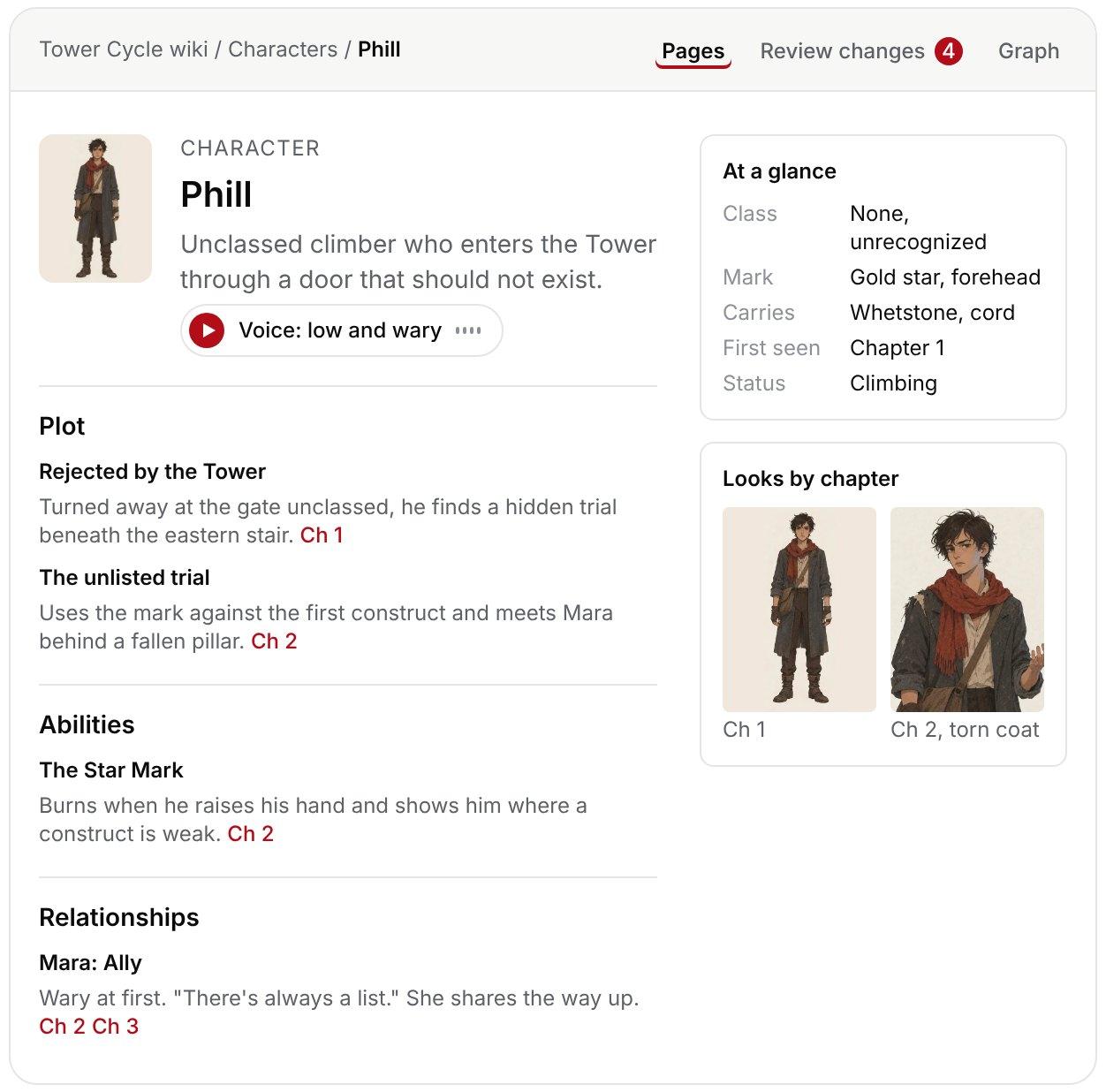
When you edit a chapter, the page updates with it, and you review each change before it is saved. From the same page you can give a character a voice and, on paid plans, a reference sheet that keeps their face the same in every picture and video. It is free to start; see the pricing page for what each plan includes.