Most story bibles fail for the same reason most internal wikis fail: they become storage, not systems. Facts pile up, but the writing room still has to remember what matters in the moment.
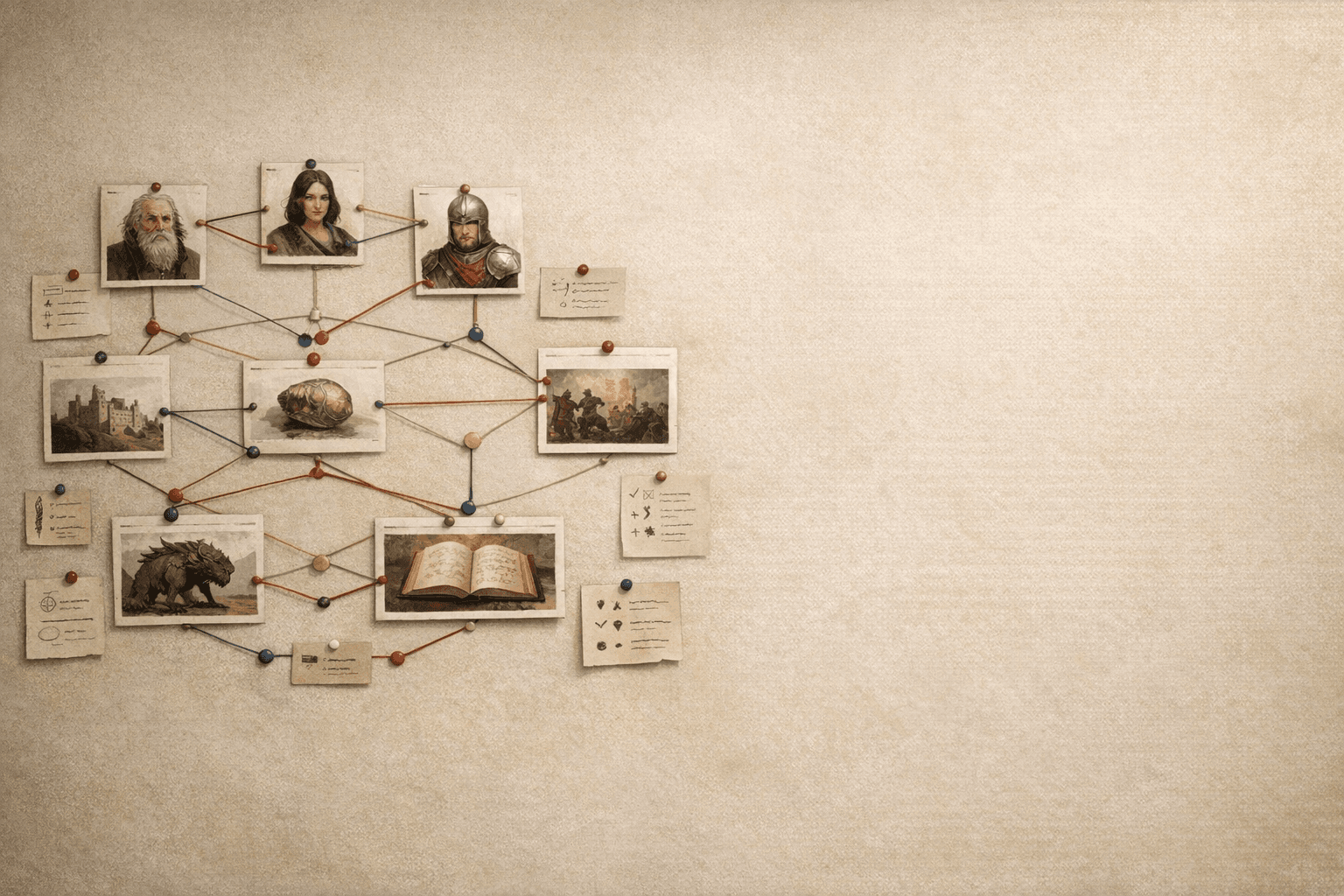
If you want a model-assisted workflow to hold canon, you need more than character sheets. You need a way to separate durable truth from changing state, keep passages close to entities, and attach every visual reference to the context that made it canonical.
Start with the pieces that actually change decisions
A useful story bible is not an archive of everything. It is a decision surface. The facts worth recording are the ones that alter what the next scene can plausibly say, show, or imply.
That means your first pass should focus on identity, relationships, rules of the world, locations with consequences, and the current state of important objects or factions.
- Durable facts: lineage, role, laws of magic, architecture, timelines
- Mutable state: alliances, wounds, possessions, current location, active conflicts
- Scene context: recent passages, current objective, unresolved tension
Treat passages as first-class canon, not just the entities they mention
Writers do not reason in databases alone. They reason in scenes, paragraphs, and remembered turns of phrase. A story bible that only stores entity summaries forces the room to reconstruct the dramatic context every time.
Passages let you preserve how canon was expressed. They become evidence for continuity, better retrieval targets for models, and a direct bridge back into the draft.
Separate stable lore from world-state memory
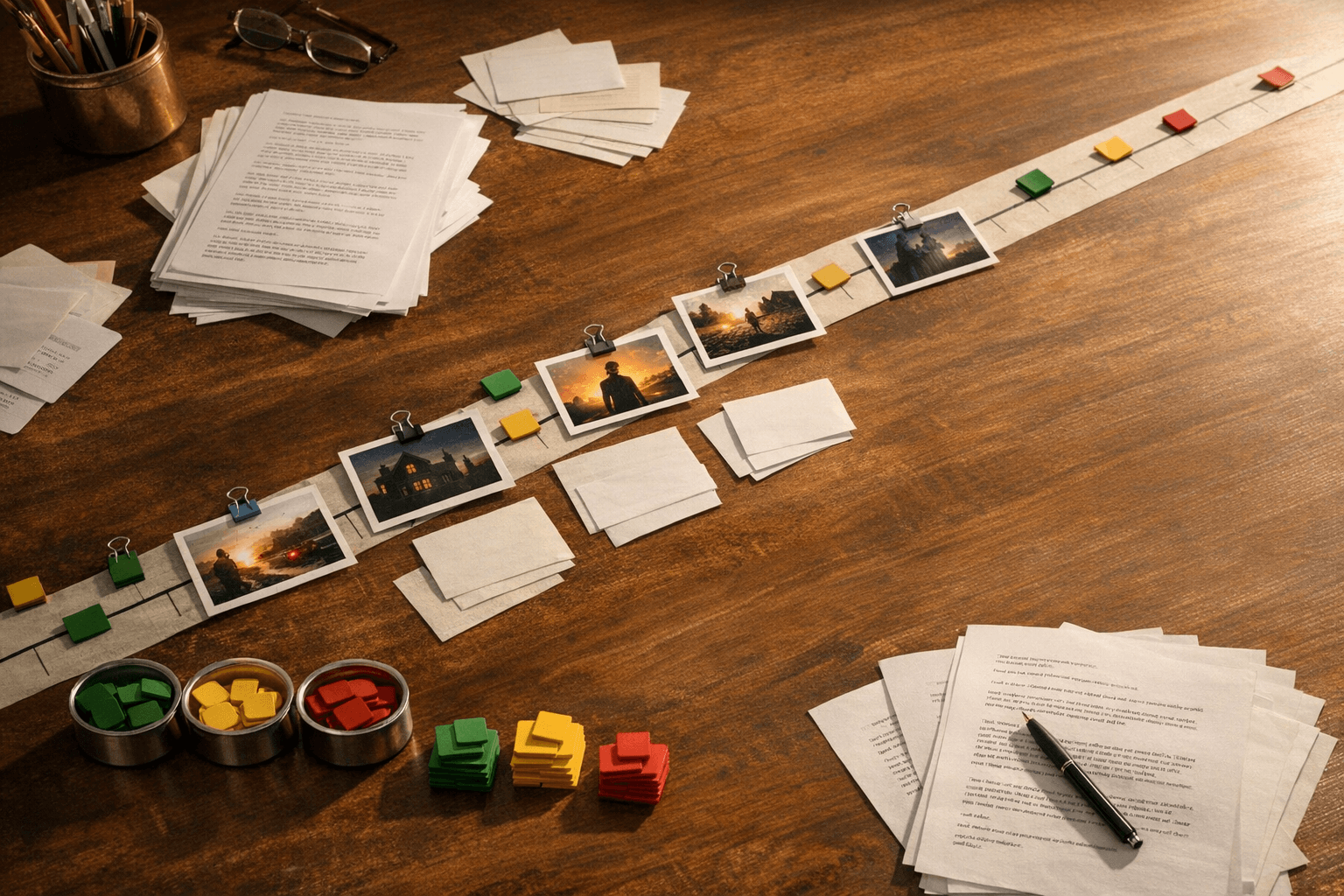
Canon drift usually happens when teams overwrite truth instead of tracking change. A knight is not simply brave or injured; he becomes injured at a specific point in story time and that event should remain visible.
When you model state as history, current truth becomes something the system can derive instead of something the room has to remember by instinct.
- Immutable events make continuity warnings explainable.
- Derived current state makes drafting and generation more reliable.
- Historical provenance helps resolve disagreements without long meetings.
Attach visual canon to prompt provenance
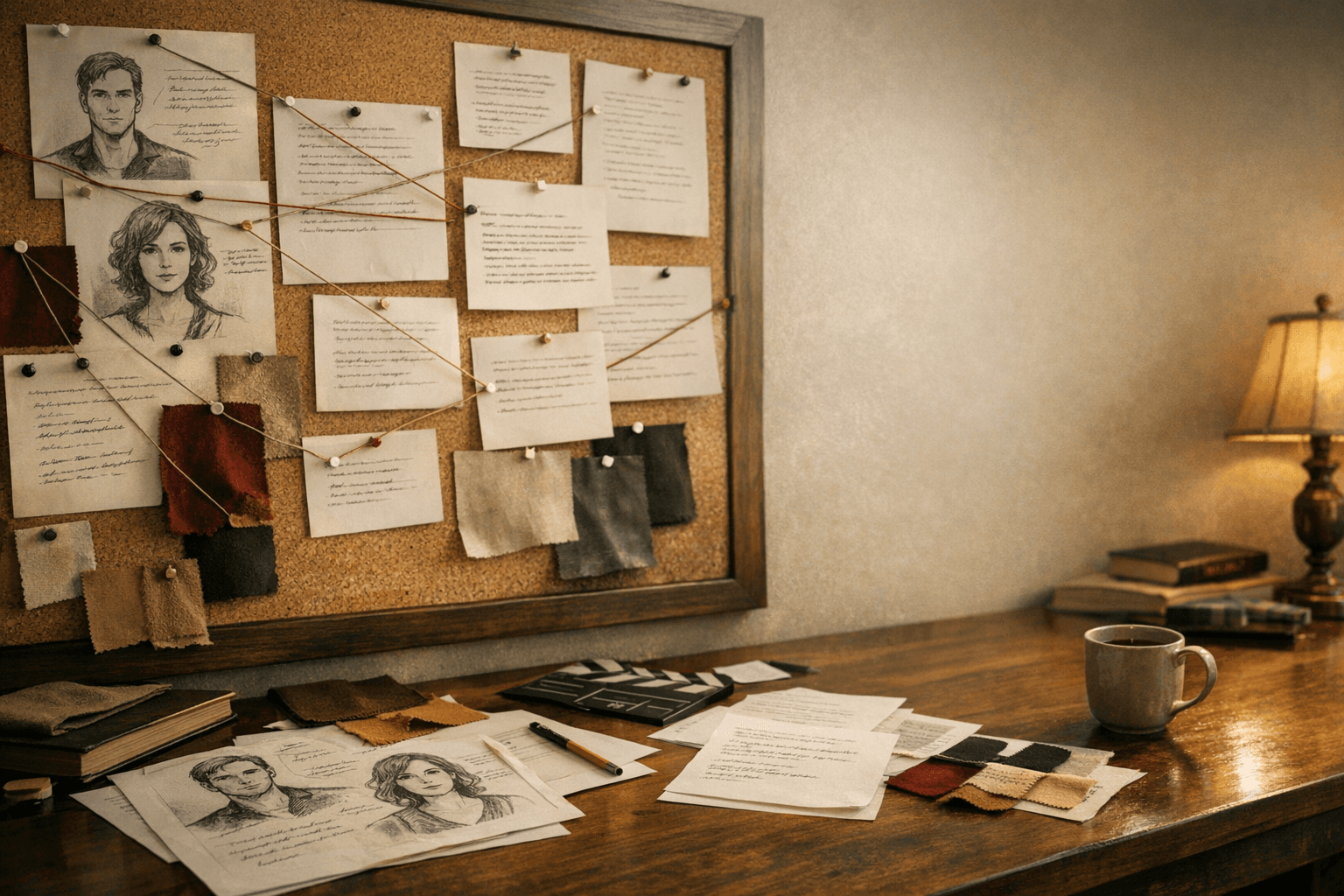
Images become unreliable when teams save a beautiful frame but lose the reasons it worked. The cover, costume, or set reference needs the associated prompt, related entry, and originating scene beat.
That provenance matters even more with model-assisted imagery because visual drift happens as quickly as textual drift. Canonical anchors only hold if the system remembers where they came from.
Keep the draft at the center
The writing surface is where momentum lives. A strong model-assisted story bible should help the draft, not compete with it for attention.
The simplest test is this: after you add structure, does the next scene get easier to write? If not, your system may be collecting information without improving execution.