Teams often believe they have a continuity system when what they really have is a pile of notes. Notes can be useful, but they tend to flatten time. They describe the world in broad strokes while quietly losing the sequence of changes that made the current situation true.
State is different. State tells the room what is true now, what changed to make it true, and which facts should govern the next paragraph. That difference matters even more in model-assisted workflows, where the system needs something more precise than a general summary to write or generate faithfully.
Notes describe the world, state resolves the moment
A note might tell you that the city is unstable, the queen is missing, or the gate is damaged. State tells you whether the gate is still usable tonight, whether the queen is presumed dead or secretly imprisoned, and which factions know the truth.
This is why state is operational while notes are often ambient. Writers and model systems both need the resolved version of reality that applies to the active scene, not just a background briefing.
Current truth should be derived from events
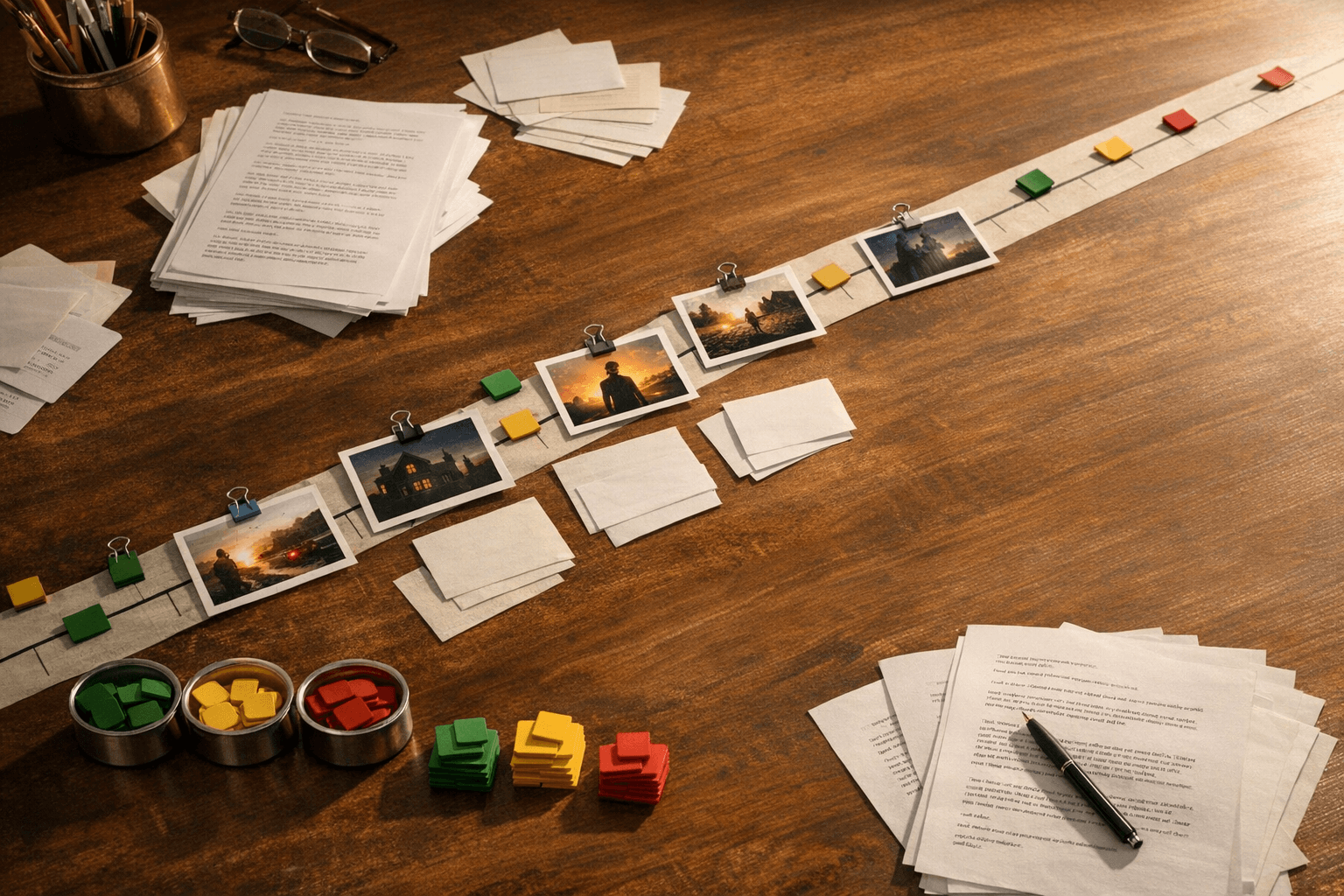
When teams overwrite a summary every time something changes, they erase the explanation for why the world is different. That makes disputes harder to settle and continuity errors harder to diagnose. Event history solves that by preserving each meaningful change as its own record.
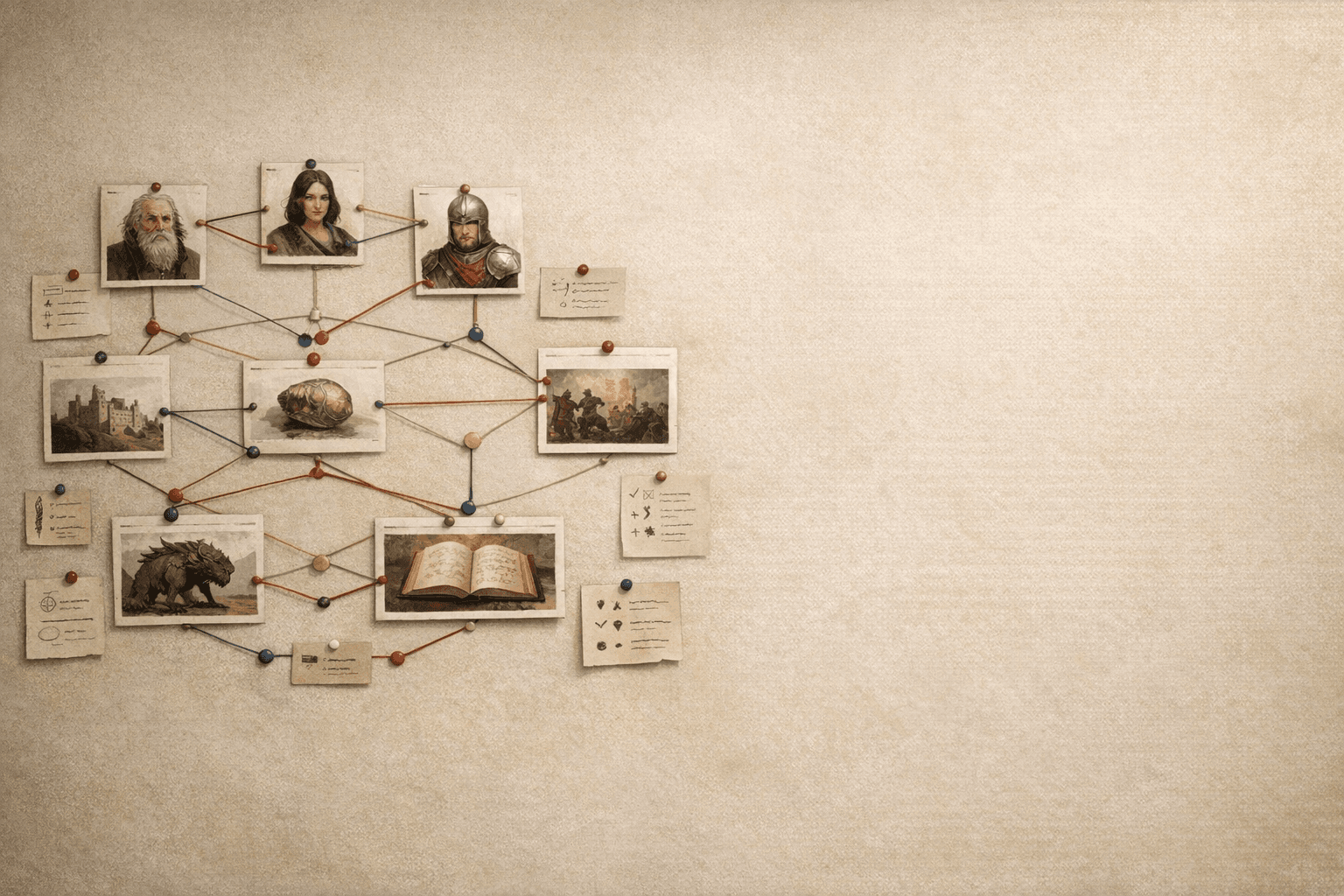
Once event history exists, current truth can be derived instead of manually remembered. The room gets a state view that is easier to trust because it can be traced back to concrete story moments.
- Events preserve when a change happened and what caused it.
- Derived state shows what is true now without hiding the path that led there.
- Continuity review becomes evidence-based instead of memory-based.
State makes retrieval sharper for model-assisted drafting
Large context windows do not fix ambiguous truth. If the retrieval layer returns a mix of old summaries and recent changes without resolving them, the model still has to guess which version governs the scene.
State-aware retrieval narrows that ambiguity. It lets the drafting system prioritize current truth while still carrying the nearby event history that explains why the truth looks the way it does.
Conflict review gets easier when history is visible
A good continuity warning should not merely say that something is wrong. It should say what record conflicts, what the current state appears to be, and which event or passage established that understanding. That kind of warning is only possible when state is tied to history.
This is especially valuable in collaborative rooms. People can disagree about the scene, but they should not have to guess what the system believes or where that belief came from.
The room moves faster when truth is ambient
State should reduce interruption, not create more administration. When the current truth about characters, locations, objects, and factions is ambient around the writing surface, the team spends less energy rechecking basics and more energy shaping the scene.
That speed compounds. A room with trustworthy state writes with more confidence because it does not have to rebuild the world every time a paragraph touches canon.