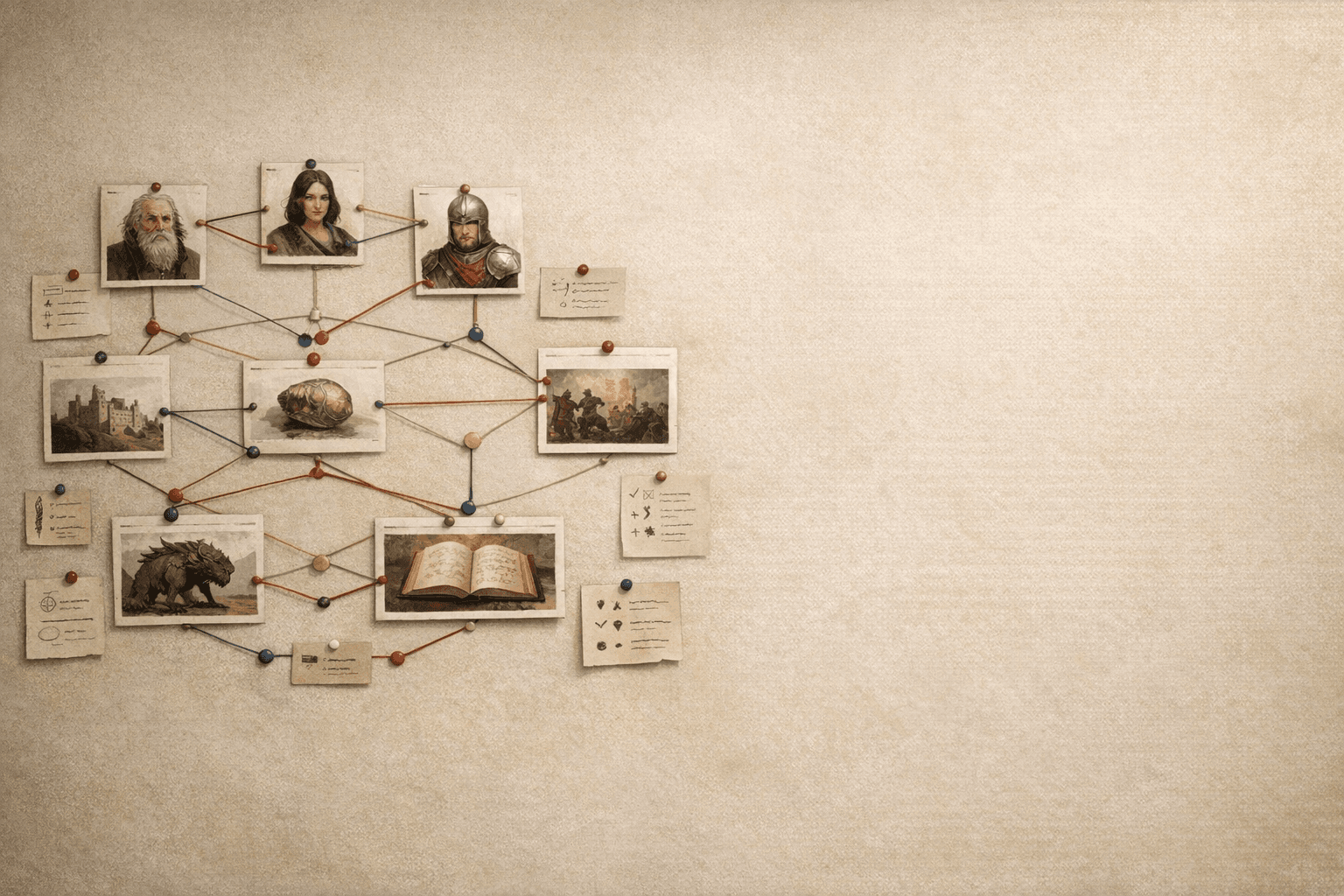
Recurring characters tend to break the moment a model-assisted workflow treats each scene like a fresh introduction. The prose may sound fluent, but the character quietly shifts in voice, priorities, memory, physical detail, or emotional logic from one draft to the next.
Stable character writing comes from giving the system a packet it can inherit, not a vague reminder to stay consistent. Identity, current state, relationship pressure, and passage evidence each do a different job, and the draft gets stronger when those layers are kept separate instead of compressed into one oversized prompt.
Identity is not the same as current state
Writers often describe characters with a single blended summary that tries to cover who the person is and what they are going through right now. That works until the story changes them. Once a betrayal happens, an injury lands, or an allegiance shifts, the old summary becomes half true and half stale.
A better system separates durable identity from mutable state. Identity holds the traits that make the character recognizable across the whole work, while state captures the temporary truths that should color the current scene.
- Identity: values, role, baseline voice, appearance logic, signature habits
- State: injuries, alliances, active goals, emotional temperature, current location
- Scene pressure: what this moment is forcing the character to decide, hide, or reveal
Attach voice to passages, not adjectives
Telling a model that a character is dry, formal, wounded, or playful is not enough to preserve voice. Those labels are too abstract on their own. The system needs evidence in the form of actual lines, beats, and nearby passages that show how the character expresses those qualities under pressure.
Passage-level anchors do more than improve style. They help the room preserve cadence, priorities, and emotional texture without flattening every scene into the same summary language.
Keep relationship truth close to the scene
Character drift often comes from relationship drift. A sibling who is supposed to be estranged suddenly sounds supportive. A lieutenant who fears the protagonist starts joking with them as if nothing happened. These are not just dialogue issues. They are canon issues.
The system should carry the active relationship state that matters to the current paragraph, not just a timeless note that two characters know each other. Relationship truth is one of the fastest ways a reader notices continuity failure.
Save approvals as reusable character packets
When a scene gets a character exactly right, that result should become reusable production material. Save the passage, related facts, visual anchors, and prompt provenance together so the next draft inherits the same logic instead of rebuilding it from memory.
This turns a good scene into a durable reference packet. Over time, the room stops depending on intuition alone because the system can point to what already worked and why.
Review drift at the paragraph seam
The best editorial checkpoint is not a giant audit at the end of the day. It is the seam where a new paragraph touches established canon. That is where continuity questions are still cheap to fix and where evidence is easiest to inspect.
A model-assisted drafting workflow gets much safer when editorial review happens close to the paragraph, with the relevant canon, state, and comparison passages visible. The goal is to correct drift while momentum is still alive, not after it has spread across the chapter.